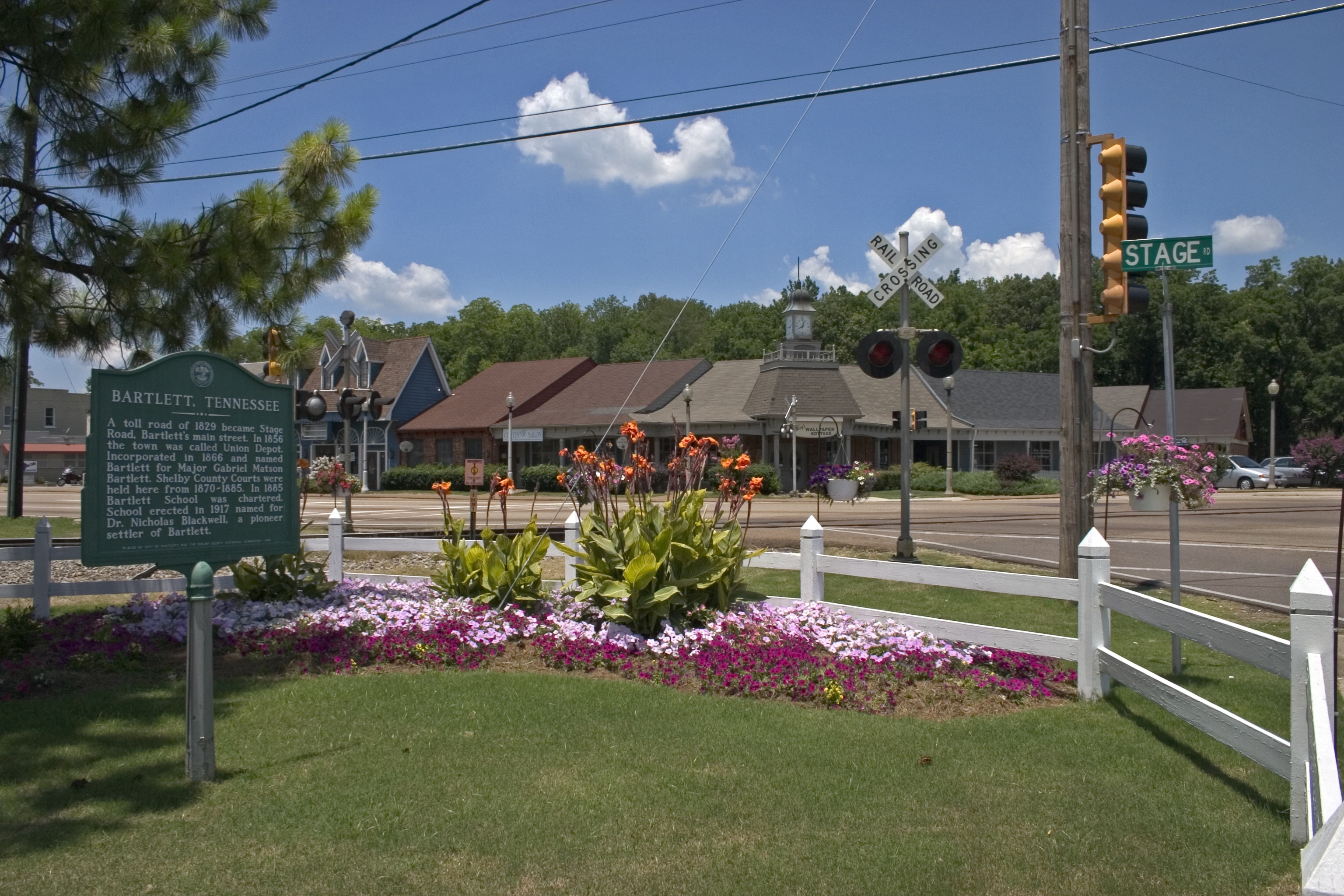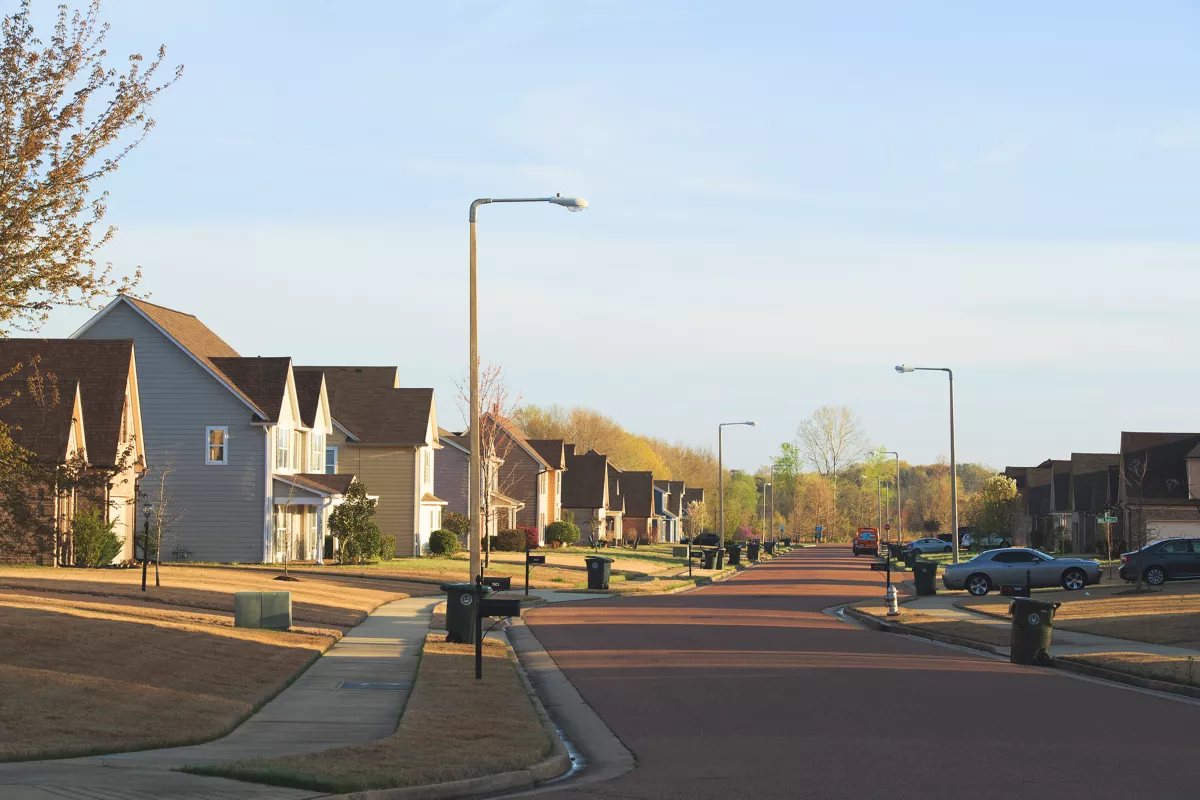
Collierville still centers on a historic town square with its original train depot and gazebo, even though the town has grown into one of the larger and more affluent suburbs east of Memphis. An exchange buyer here is often choosing between legacy town-core product and newer retail and office space along the Houston Levee and Poplar Avenue growth corridor, and those two halves of Collierville do not underwrite the same way.
Two Different Collierville Markets
The town-square core holds smaller, older commercial buildings with a mix of local retail, restaurants, and professional offices, many historically owner-occupied and only recently turning over to investment ownership. West Collierville, along Houston Levee Road and the Poplar Avenue extension, is newer construction with larger floor plates, bigger parking fields, and a tenant mix made up largely of regional and national retailers following the town's master-planned residential growth.
A 1031 buyer should decide early which half of Collierville actually fits the exchange goal, because a downtown-core building bought for stable income behaves very differently in financing and lease structure than a newer West Collierville retail pad bought for a credit tenant.
What Actually Trades In Collierville
Candidates that come up in a Collierville search generally sort into a short list.
- historic-core retail and office buildings around the town square
- newer retail pads along Houston Levee Road and the Poplar Avenue corridor
- medical office near the town's hospital and clinic clusters
- multifamily serving the town's master-planned residential growth
- self-storage and flex space on the town's western edge
Where A Generic Collierville Quote Falls Short
A quote that prices Collierville as one uniform submarket usually has not accounted for the difference between the town-square core and West Collierville, and that gap shows up first in financing: lenders underwrite the two areas differently, and a generic scope rarely spells out which comparable set applies to which candidate.
It also tends to gloss over how competitive Collierville has become. Because the town consistently ranks among the area's most desirable suburbs, well-located retail and office product can draw multiple offers, and a coordination plan that assumes a leisurely comparison period is not built for how fast Collierville candidates actually move.
Keeping The Search Moving In A Competitive Market
Given how quickly Collierville product can go under contract, lender preflight and title review should begin as soon as a candidate is identified rather than after every comparison step clears. Backup candidates in Germantown or Cordova should stay active on the list, since losing a Collierville property late in the 45-day window leaves little time to restart a search from scratch.
Nearby Alternatives Worth Tracking
Investors who like Collierville's demographics but cannot find a fitting candidate inside town limits often look next at Germantown to the west or the newer growth areas around Piperton and Eads to the east. Those comparisons are worth making before the identification deadline, not after a Collierville deal falls apart in diligence.
What A Real Collierville Diligence File Looks Like
For a town-square building, the file should include a survey confirming any historic overlay or design-review restrictions that come with the property, since Collierville's historic district can add a permitting step that a generic scope will not anticipate. For West Collierville retail, the file should include the shopping center's co-tenancy provisions, any pending outparcel development that could affect parking counts, and traffic count data for Houston Levee Road specifically, not a countywide average.
Either way, an investor should request the seller's most recent property tax appeal history, since Collierville's rising assessments have prompted a number of recent appeals that can affect the going-forward expense line a lender will underwrite against. A generic quote that skips this line item is quietly asking the investor to find out about it after closing instead of before identification.
Common 1031 Exchange Questions
Is Collierville's town square different from the rest of the market?
Yes. The historic square holds smaller, older buildings that trade and finance differently than the newer retail and office product along Houston Levee Road and the Poplar Avenue corridor, so a candidate should be evaluated against the right comparable set.
Why does Collierville product move quickly?
The town consistently ranks among the area's more desirable suburbs, which draws steady demand for well-located retail, office, and multifamily product and can produce multiple offers on a single listing.
What property types make sense for a Collierville exchange?
Historic-core retail and office, newer retail pads on the western corridor, medical office, multifamily, and self-storage are the categories that come up most often, depending on the investor's income and management goals.
Should a backup location be identified alongside Collierville?
Most investors keep Germantown, Cordova, or the Piperton and Eads growth corridor active as backups, since a fast-moving Collierville market can eliminate a first-choice candidate with little warning.
What financing differences should an investor expect between the two halves of Collierville?
Lenders often apply different comparable sets and underwriting assumptions to the historic town-square core versus newer West Collierville construction, so a generic loan quote based on only one of those areas can understate the real cost or timeline.
Does Collierville's historic district affect a town-square purchase?
It can. Design-review or overlay restrictions tied to the historic district may add a permitting step for exterior changes, so this should be confirmed with the town before a historic-core candidate is finalized.
Should property tax appeal history be reviewed before buying in Collierville?
Yes. Rising assessments have prompted a number of recent appeals in Collierville, and reviewing that history helps confirm the going-forward expense line a lender will actually underwrite against.